Here is a number that should change how every contractor sends estimates: an SMS with a link is opened within 3 minutes, on average. An email with the same link sits in an inbox for 11 hours.
Customers do not read email anymore. They read text. If your estimate is sitting in their Gmail Promotions tab while the homeowner shops three more contractors, you have already lost.
Yet most contractor software still treats SMS as a paid add-on, a feature you unlock on the highest tier, or something you have to bolt on with Twilio yourself. Here is how to actually send estimates by SMS, why the workflow matters, and what to look for in software.
What "send an estimate by SMS" actually means
The wrong version: software exports a PDF, you screenshot it, you text the screenshot.
The right version: software generates a tokenized URL where the customer can view, sign, and pay your estimate in their phone browser. The contractor texts that URL. The customer taps. The estimate opens. The customer reviews, signs, and pays without ever creating an account or downloading an app.
The URL is critical. Email-attached PDFs are dead. The customer portal URL is alive — it can update if you make a change, it tracks views, it lets the customer pay directly, and it works on every phone.
Why "the customer portal" is the unsung hero
The portal is where SMS estimates actually live. Send a text with a URL, the URL opens, and what the customer sees inside that URL determines whether they sign.
The customer portal needs to:
- Open in any mobile browser without login. No customer accounts, no passwords.
- Show the estimate clearly on a phone screen — not a PDF zoomed in by 400%.
- Accept e-signature with one tap.
- Accept payment via Stripe, Venmo, or Zelle (your call which) directly inside the portal.
- Let the customer ask a question or request a change without leaving the URL.
Most contractor software has a customer portal that requires login, looks dated on mobile, or requires the customer to download an app. Those portals kill SMS conversion. The whole point of SMS-first is friction reduction; if the URL leads to a login wall, you lost the gain.
What to look for in contractor software
If you are evaluating tools and SMS estimates matter to you, here is the checklist:
1. Native SMS sending. Twilio integration that requires you to bring your own Twilio account and configure phone numbers is not "native." Look for SMS as a built-in feature included in the subscription, not an add-on with per-message fees.
2. No-login customer portal. Test this yourself. Open a sample estimate URL in incognito mode on your phone. If it asks for an account, the software treats SMS as an afterthought.
3. Mobile-first portal design. Open the portal on a phone and check: does it look polished, or does it look like a desktop site forced onto a phone? Buttons should be tappable. The signature area should fill the screen. Payment should be one tap to Stripe Checkout.
4. Two-way messaging. When the customer replies "Can you do this on Tuesday?" via SMS, where does it go? If it goes to your personal phone, that is fine but inconvenient. If it goes into the same lead conversation thread inside your dashboard, that is gold — the whole back-and-forth becomes a searchable record.
5. Cost transparency. SMS providers charge ~$0.0075 per message. If the software's "SMS tier" is $50/mo on top of your base, math it out — that is 6,000+ messages a month before you break even. Look for SMS to be part of the tier you actually use, not its own line item.
The Senku approach
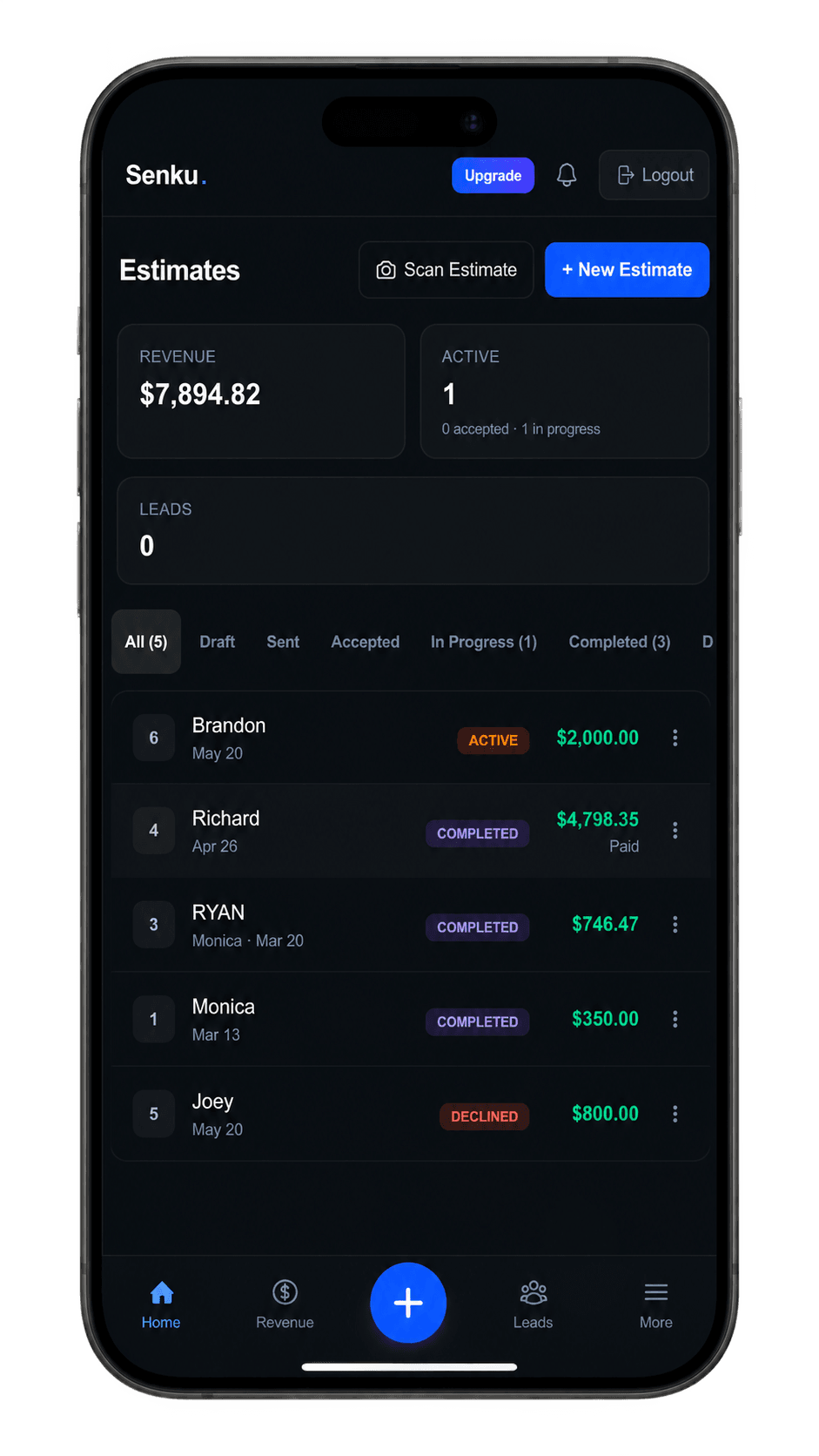
In Senku, SMS estimates are first-class on the Business tier ($99/mo, unlimited messages). The customer portal is no-login by default and mobile-first. Two-way SMS routes back to the lead inbox in your dashboard.
The pattern that emerged from our own painting business and from early customers:
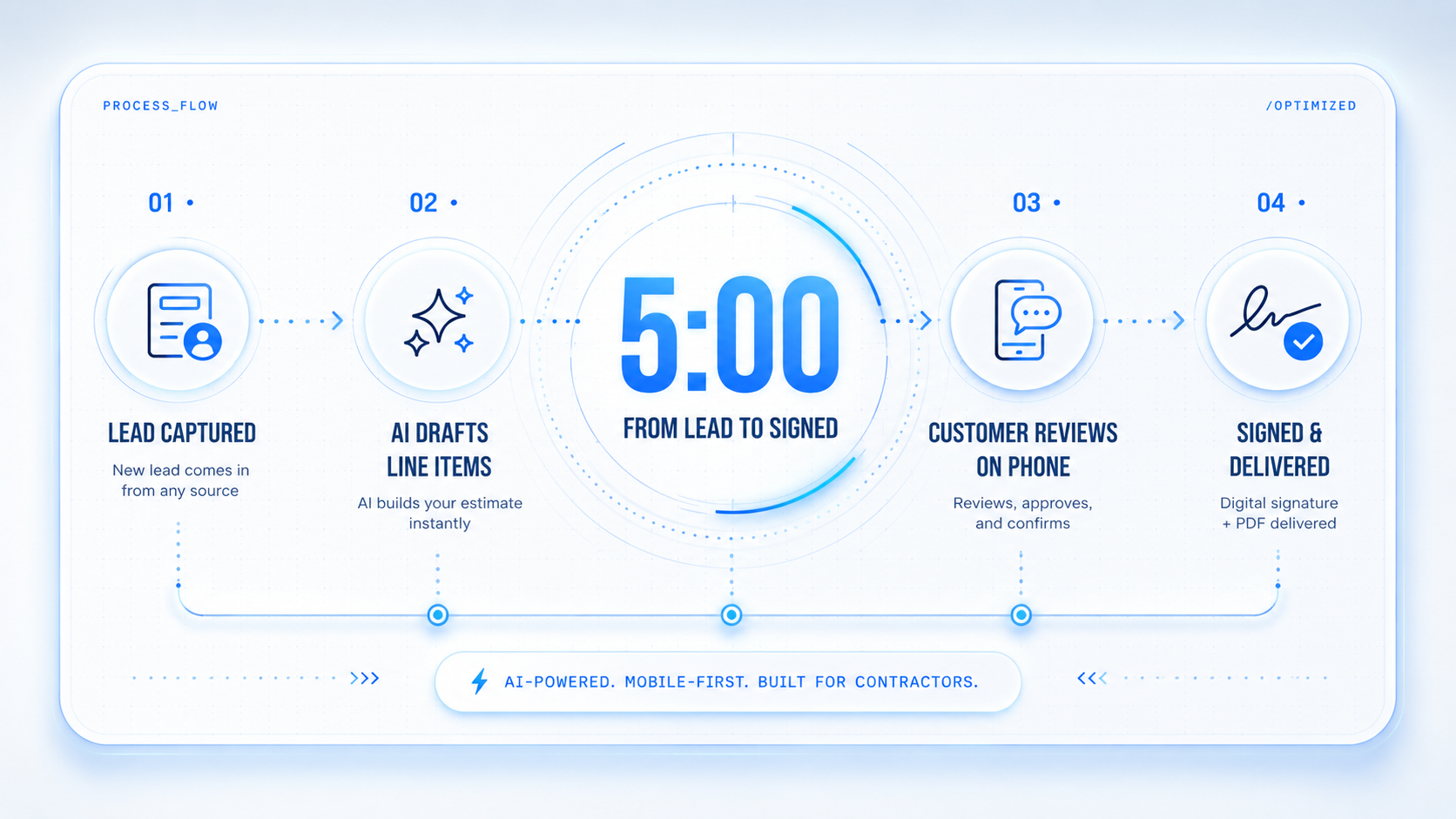
- Walkthrough in the morning.
- Draft the estimate in 5 minutes back at the truck (AI assist helps here).
- Hit "Send by SMS" from the estimate page — the customer gets a text within seconds.
- Customer opens the link, scrolls the estimate, taps Accept, signs with their finger, taps Pay Deposit.
- Stripe deposit hits the contractor's account before the contractor finishes lunch.
That entire loop used to take 3-5 days. Now it takes 90 minutes. That is what SMS-first contractor software actually means.
When SMS is the wrong choice
SMS is not the right channel for every job. A few cases where it is not:
- Large commercial bids — these need a formal proposal, often with a cover letter and detailed line items. PDF email is still appropriate.
- Customers who explicitly said they prefer email — SMS is more intimate; some customers find unsolicited SMS pushy. Ask.
- Multi-decision-maker households — if husband and wife both need to review, SMS-to-one-person can frustrate the other. Email both addresses or invite both to the portal.
For most jobs in the $500-15,000 range, SMS-first is the right default. Email if asked.
Try it
Senku Business tier includes unlimited SMS estimates and the no-login customer portal. There is a 14-day trial — long enough to send a real estimate to a real customer and see whether the workflow actually fits how you work.
Test the customer portal on your own phone first. If it does not feel right to you, it will not feel right to your customer. We built it to feel right.