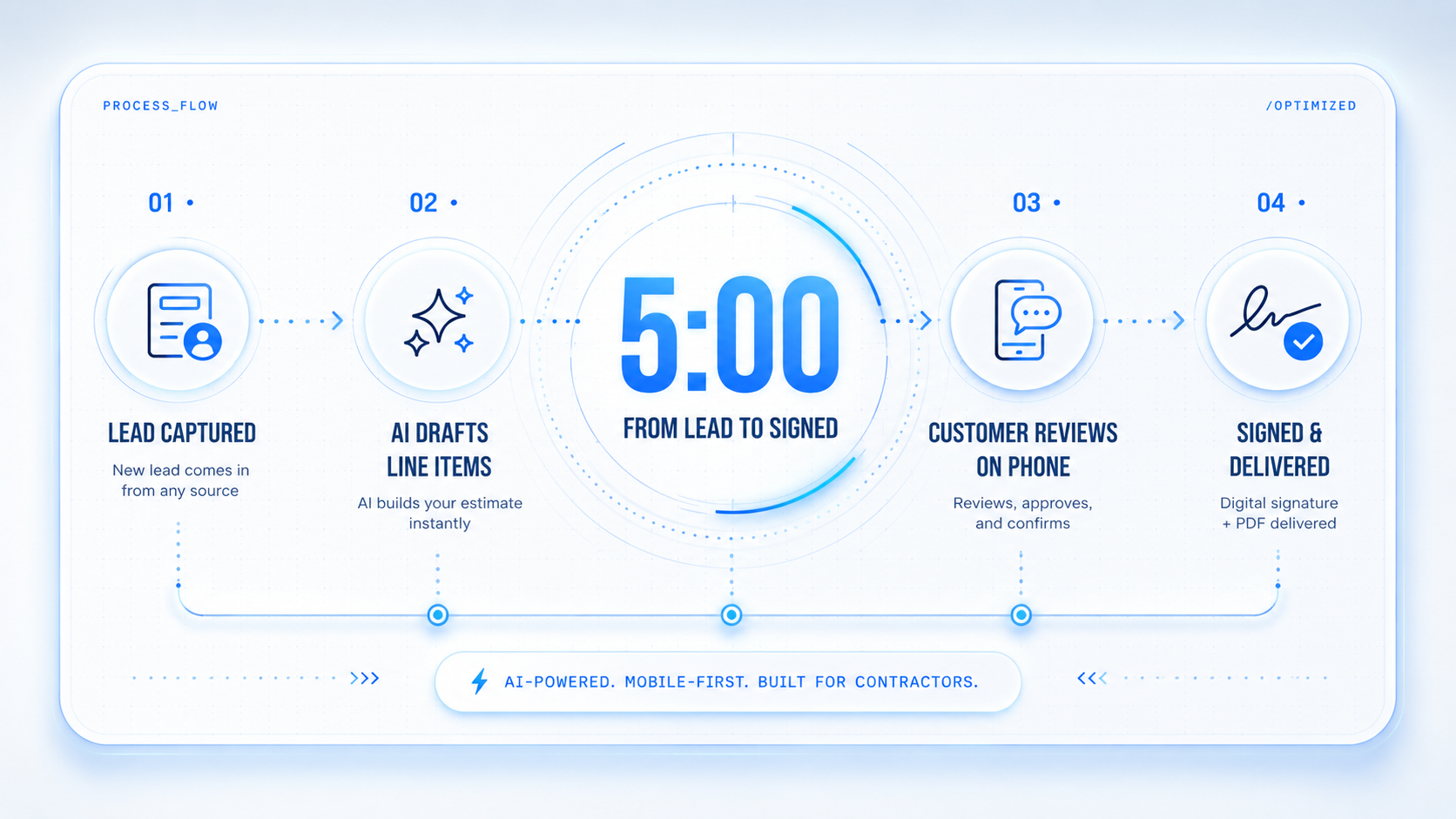
"Free" is a loaded word in contractor software. Most platforms that say "free" mean a 14-day trial that becomes $69/mo on day 15. A few actually give you a working tool at $0/month — and the difference matters a lot when you're trying to send your first 5 estimates.
Here's the real landscape in 2026, from someone who's used all of these and runs a contracting business.
What "free with Stripe" actually means
Every contractor app on this list integrates Stripe to collect payments. The question is whether the free tier actually lets you collect, or whether Stripe is gated behind the first paid tier.
The honest split:
- Free tier with Stripe enabled: Senku, Joist (handyman tier), Invoice Ninja (self-hosted).
- Free tier, Stripe gated: Bookipi.
- Free for 30 jobs, then paid: ServiceM8.
- 14-day trial, no real free tier: Jobber, Housecall Pro, Buildertrend.
Pick from the first group if you actually need free.
Senku
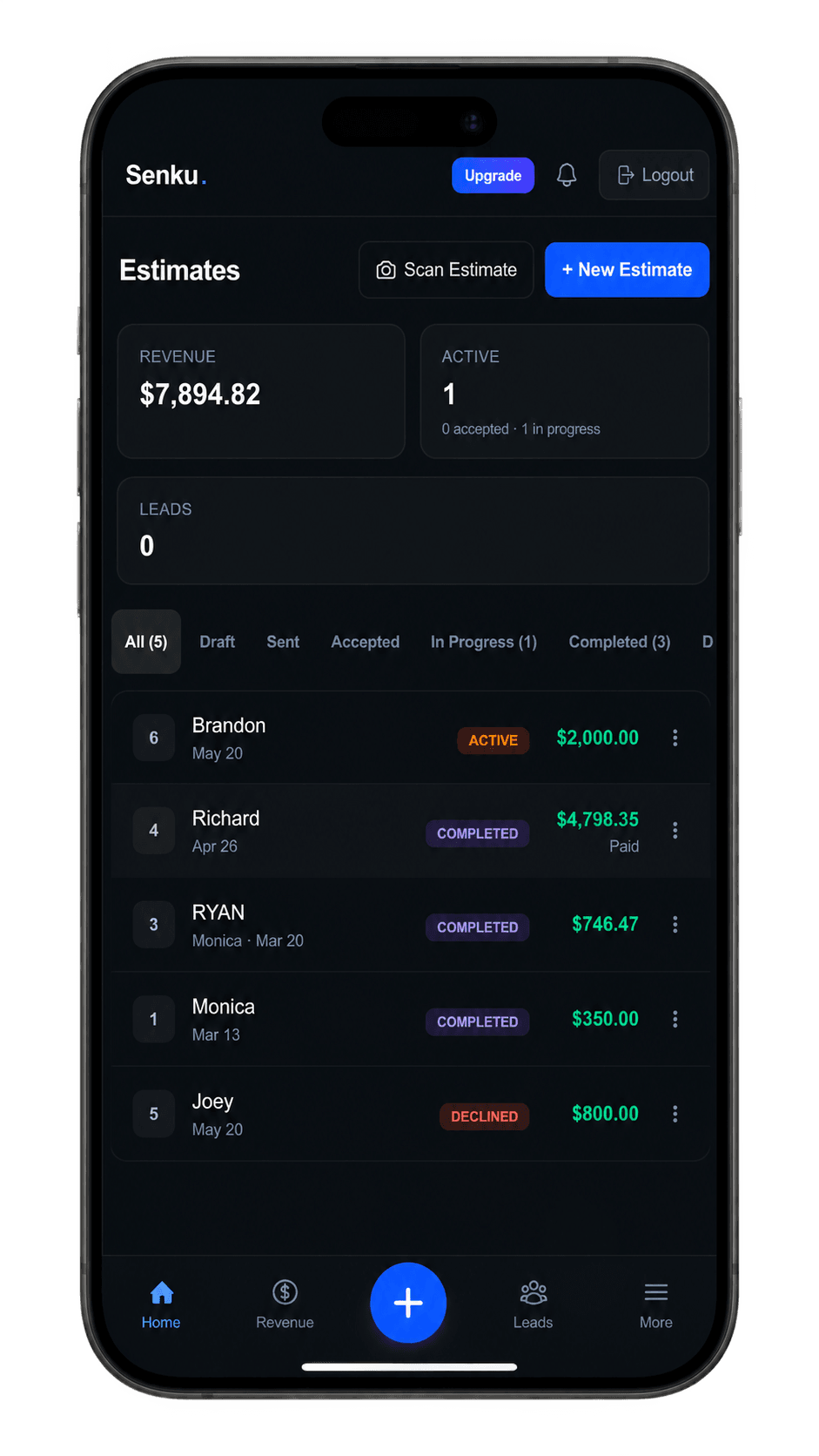
Free tier: 5 estimates total, customer portal access, Stripe checkout enabled, PDF export.
Where it shines: the customer portal is the key differentiator. Most "free" tools let you generate a PDF and email it. Senku gives your customer a real web URL where they can view, sign, and pay — no customer login, mobile-first, branded with your business. Stripe payments are tenant-owned (your account, your funds, not held by Senku).
Where it hits the limit: if you're sending 5+ estimates a month, you'll need Starter ($15/mo) which adds unlimited estimates, email sending, expense tracking, and a materials catalog.
Start a free account — no card, no 14-day timer.
Joist
Free tier: unlimited estimates, unlimited invoices, Stripe payment processing, mobile app.
Where it shines: mobile-first design, very contractor-friendly. The free tier is genuinely free. Strong if you're a handyman, remodeler, or solo trade pro who just needs to quote and bill.
Where it hits the limit: thin on workflow features. No customer portal worth the name. No AI assistance. No scheduling or job-tracking — it's purely an estimate-and-invoice tool. If your business is more than two of you and your phone, you outgrow it fast.
Invoice Ninja
Free tier: self-hosted version is unlimited and totally free; cloud version has a generous free plan.
Where it shines: open-source, full data ownership if you self-host, customizable enough to fit almost any workflow. Supports Stripe, PayPal, and many other gateways.
Where it hits the limit: if you self-host, you're now operating a server. The hosted free tier has fewer feature limits than other free tiers but lacks contractor-specific touches (no estimating templates designed for trades, no built-in job management). You're trading polish for flexibility.
ServiceM8
Free tier: 30 jobs/month, then $19/mo paid tier.
Where it shines: legitimately useful workflow for trade operations — job cards, scheduling, simple quoting, invoicing, payment collection.
Where it hits the limit: 30 jobs/month is fine for an established solo with steady work but tight for someone in growth mode. Once you hit 31, you're paying — and you may as well evaluate alternatives at that price point.
Bookipi
Free tier: estimates and invoices, but Stripe is gated behind paid plans.
Where it shines: clean templates, mobile-friendly, easy to use for non-technical operators.
Where it hits the limit: the gated Stripe is the dealbreaker for most contractors — collecting payment is half the point of using software. Free without Stripe is mostly a PDF generator with extra steps.
How to choose
The shortcut: start with whichever free tier matches the workflow you actually need to solve, not the one with the most features on paper.
- Just need to quote and bill? Joist.
- Want a customer portal so people actually pay you? Senku.
- Self-hosting is your thing? Invoice Ninja.
- Have a steady book of 20-30 jobs/month? ServiceM8.
You'll outgrow whichever you pick in 6-12 months. That's fine — by then you know what you actually need, and the upgrade is a known cost.
If you want to try Senku's free tier today, it takes about 90 seconds to set up. No card. No timer. Your first estimate goes out before your coffee cools.