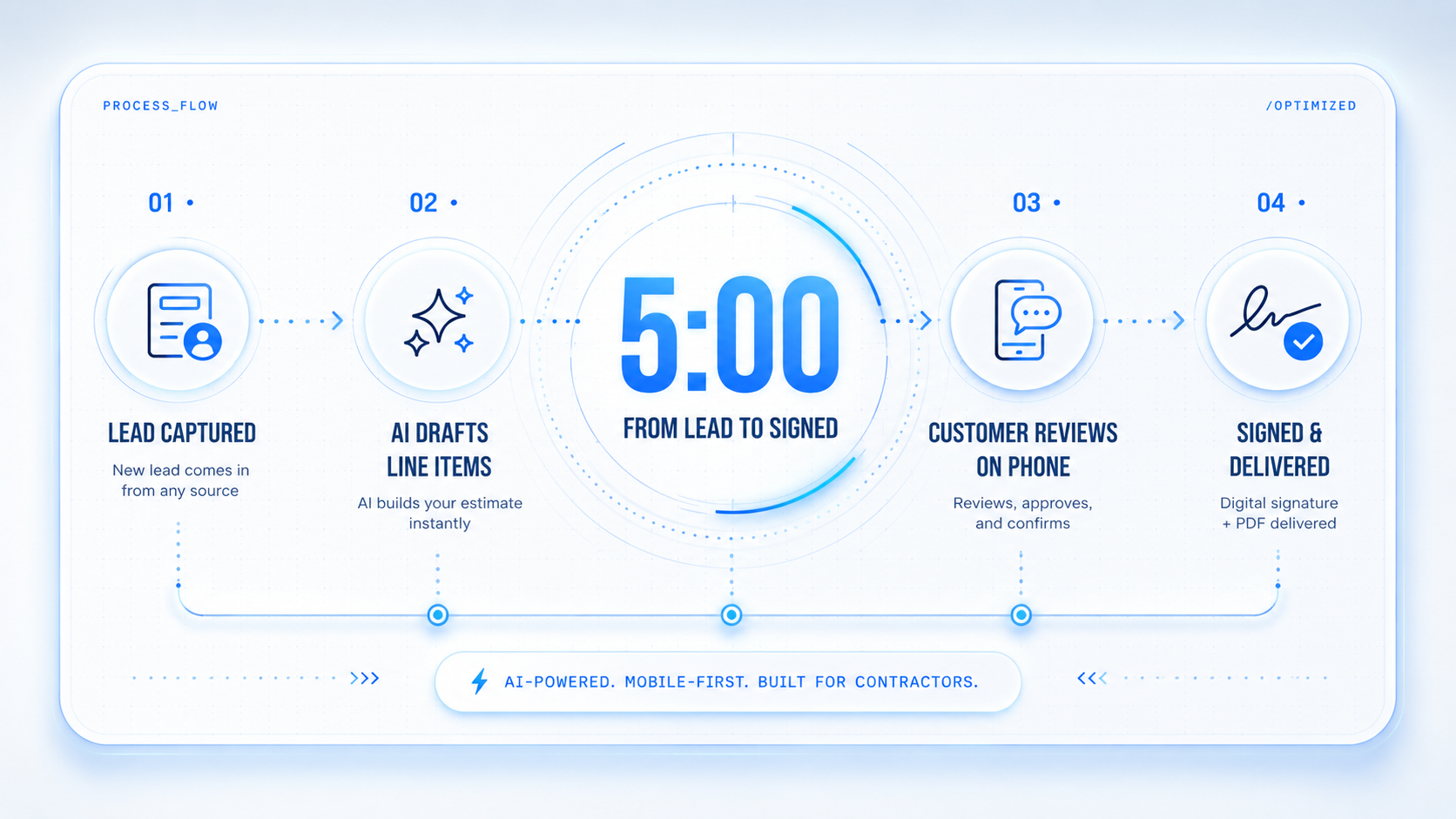
AI-drafted estimates are the loudest pitch in contractor software right now. The promise: type one sentence, get a complete estimate with line items, quantities, units, and prices. The reality: it depends entirely on the constraints you put around it.
We built one. Here's what we learned about when it's a 30-minute productivity win and when it's a customer-relationship landmine.
The actual workflow that works
The AI estimate feature in Senku takes three inputs:
- A short scope description ("two-room interior repaint with patching, ceiling spray, and trim")
- The contractor's own material catalog (their suppliers, their prices)
- The contractor's own labor rates (their hourly cost, their margin)
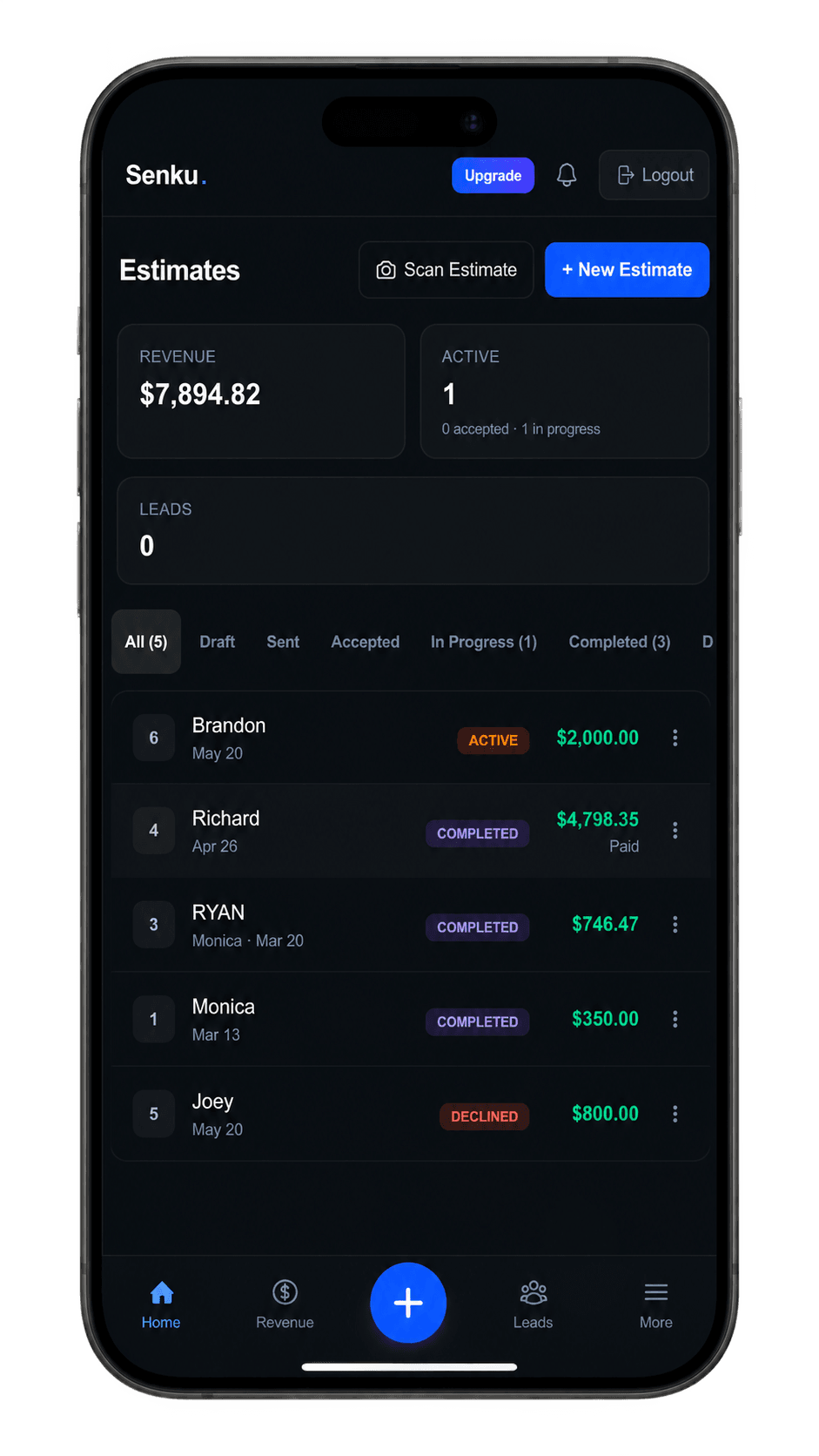
It outputs a draft line-item list — quantities, units, descriptions, and prices anchored to the contractor's actual cost base. The contractor reviews, edits, and sends.
When all three inputs are populated, the draft is usable in 2-3 minutes of review. When any of the three is missing, the output is generic and you might as well type the estimate from scratch.
Where AI helps most
Time-pressed quoting after a walkthrough. You did the walkthrough. You have rough numbers in a notebook. The customer wants it "by tomorrow." Typing the line items into a spreadsheet is the 30-minute friction point. AI compresses that to a 3-minute review.
Translating scope into line items. Customer says "I want my kitchen painted." That's not an estimate. It's a single sentence that needs to become 8-15 line items: walls (sqft), ceiling, trim, doors, cabinets if any, prep, primer, paint coats. AI is good at the scope-to-line-items expansion even when it's not great at pricing.
Sanity-checking a quote you already drafted. Paste your draft into the AI feature with the prompt "what's missing from this scope?" — it'll often flag prep, primer, drop cloths, or trim coverage you forgot.
Where AI hurts
Pricing accuracy on materials you don't sell often. If your catalog has a generic "interior latex paint" entry at one price, the AI will use that. If the customer wants Sherwin-Williams Duration specifically (3x the price of a generic latex), you'd better catch it before sending.
Specialty work it's never seen. Lead-paint remediation, lath-and-plaster repair, historic-trim duplication — AI will confidently write line items that look right but are missing $1,000 of prep work that any experienced painter would include. Don't trust AI for work where the corner cases are the work.
Quantities on irregular spaces. AI estimates square footage from your description. If you say "the dining room" and the dining room is a 19th-century octagon with built-in millwork, the AI's "350 sqft" guess is going to be off. Field measure first; have the AI fill in the line items second.
The customer-facing rule
Never send an AI draft without a human review. Not "skim it." Read every line. The AI is right ~90% of the time; that 10% is a customer-relationship-ending mistake waiting to happen.
The customer doesn't know AI drafted the estimate. They expect a professional, accurate quote from you. If three line items are wrong and you change them after sending, that's now a credibility issue — and customers remember the change order, not the original estimate.
How we use it at Perfect Finish
For routine repaints (same configurations we do weekly), the AI estimate is faster than the spreadsheet and within 2-3% on price. We trust it for those.
For anything with prep complexity, lead paint, plaster repair, exterior carpentry replacement, or a customer who hasn't worked with us before — we don't use AI. We measure, we draft, we price, the old way. The risk of getting the quote wrong on a relationship-defining first job outweighs the time savings.
The pricing model that makes AI actually useful
The reason we anchored the AI to the contractor's own catalog instead of a national pricing database: national pricing databases are wrong by 30-50% in any individual market. South Jersey paint pricing is not Manhattan paint pricing. National-data AI tools confidently underprice or overprice, and the contractor takes the hit either way.
Tenant-anchored AI takes the contractor's actual costs and applies their actual markup. The output isn't "what should this job cost in general" — it's "what would your business price this job at, based on what you've priced similar jobs at." Those are completely different questions, and only the second one is useful.
Try it
The AI line-item feature is included on Senku's Pro plan ($45/mo). Pro tier includes 5 AI estimates per week; Business is unlimited. Free and Starter tiers don't include AI — by design, because the feature only works well once you've populated your material catalog and labor rates, and that takes a few days of normal use to do well.